How retirement villages help save the NHS money
Published March 13, 2026 by Hannah Makin
Contents
It’s all about prevention
The NHS is brilliant when we need urgent treatment, but hospitals are expensive places to be, and many admissions among older people happen because smaller problems weren’t tackled early enough. Problems being things like falls, poor nutrition, loneliness or someone not asking for help until a situation becomes serious.
In retirement villages, lots of these risks are reduced naturally. The properties are built with accessibility in mind e.g. lifts instead of stairs, walk in showers, better lighting and layouts designed for easier movement. That alone cuts down accident risks.
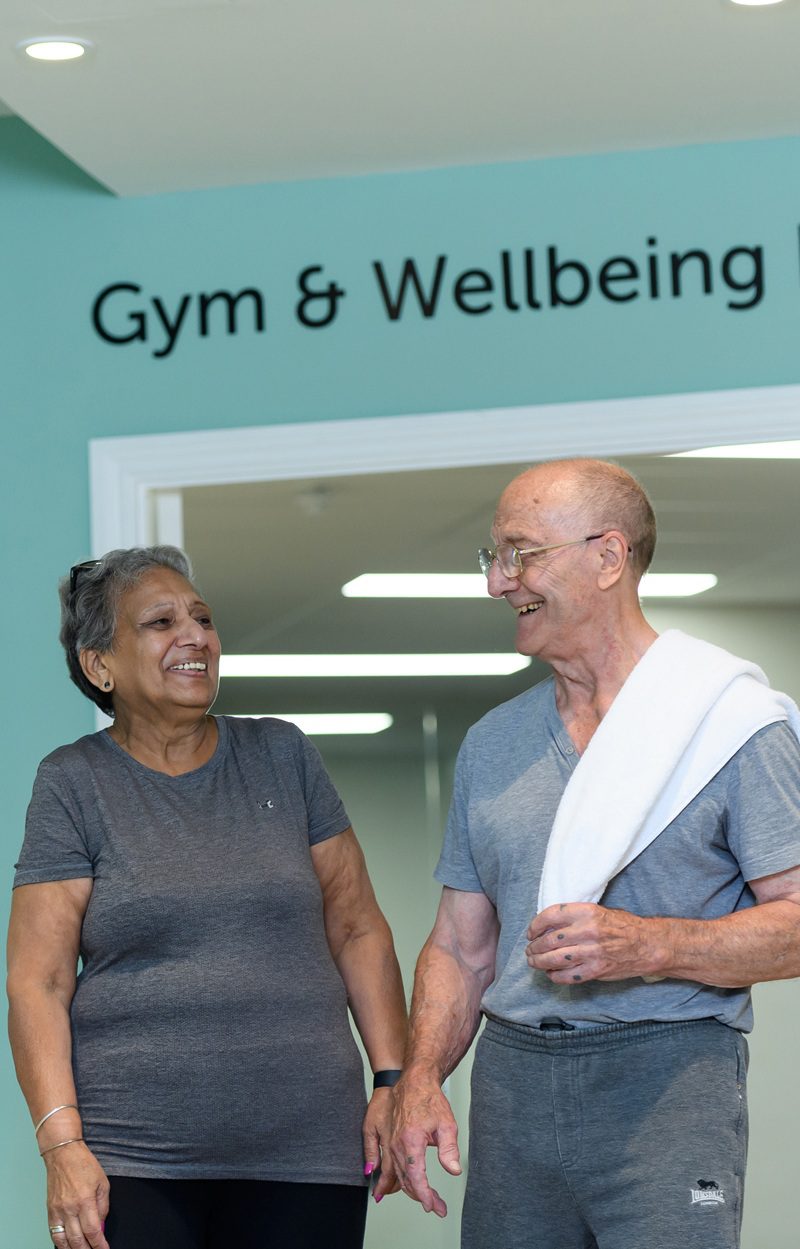
The even bigger difference is community. People pop out for coffee, they join exercise classes, they chat in communal lounges. This results in people noticing very quickly if a neighbour hasn’t been seen for a little while and not to mention the staff and wellbeing teams will can pick up on changes early.
It sounds simple but staying socially and physically active is one of the biggest factors in keeping people out of hospital. In many cases, it’s everyday connection that’s doing the preventative work.
Delaying the move into care
One of the biggest fears people have for themselves, or families have for their relatives is that they will suddenly need to move into a care home after a crisis. That’s why at ExtraCare we proudly offer something in between full independence and residential care.
Our residents still live in their own homes, whether that be an apartment, a bungalow or a cottage (village dependent) but with that all important support and facilities around them. If care needs do increase, we can offer that service gradually, meaning residents don’t have to move every time their situation changes. They stay in familiar surroundings, near friends, maintaining independence for longer.
From a system perspective, delaying or avoiding care home admission hugely reduces pressure on already stretched social care budgets.
However, it is important to note that although we can provide a high level of domiciliary care for our residents, we can’t provide round the clock care unfortunately. Therefore, if a resident reaches this stage, conversations will need to be had between the families and our knowledgeable care teams.
Real stories
Take Lennox for example. After a serious accident in 2011 left him with a broken neck, he found himself living alone in accommodation that quickly became isolating. His mobility was severely restricted, everyday tasks were difficult and mentally things were taking a toll.

Eventually, he enquired about moving into ExtraCare’s Bournville Gardens, close to where his family lived, and he says accepting a place at the village was one of the best decisions he’s ever made.
When he arrived, he needed two crutches to get around and struggled even with simple things like tying his shoelaces due to nerve damage, but life started improving almost immediately. Over time, regular exercise sessions and rehabilitation in the village gym helped him regain strength and confidence.
Today, Lennox volunteers at the gym twice a week, helps encourage other residents, walks around the village as part of his recovery and enjoys meeting neighbours in social spaces. The isolation he once felt has been replaced with connection and routine.
Importantly, he still lives independently. Knowing healthcare support is nearby gives peace of mind, but it’s the sense of belonging that has made the biggest difference.
His story shows exactly how community, wellbeing facilities and support working together can help people rebuild independence, something that benefits both individuals and the wider healthcare system.
Learning from our research and experience
At ExtraCare, we’ve gone a step further than simply believing retirement communities make a difference, we’ve measured it.
We have carried out large scale research studies with both Aston and Lancaster Universities to understand what actually happens to people’s health and wellbeing after they move into our villages. We wanted to see whether the benefits residents talk about every day show up in the data too and the results were very encouraging.
Instead of seeing the typical decline in health that many people expect as they get older, many of our residents experience improvements after moving in.
People become more active, walking speeds increase and falls reduce. Levels of frailty, which often worsen with age, are delayed and in some cases even reversed. We also saw improvements in memory and cognitive performance, including stronger recall and autobiographical memory.
Mental wellbeing shows positive changes too. Levels of depression and anxiety reduce after moving in, while social wellbeing rises sharply. In fact, over 86% of residents report they are rarely or never lonely, far lower than national averages for older adults living in the wider community! This is where the impact on the NHS becomes clear.
Our research found a 38% reduction in NHS costs after residents moved into an ExtraCare village. Unplanned hospital stays became much shorter, routine GP visits reduced significantly and overall healthcare use changed because people were healthier and able to maintain their independence for longer.
In simple terms, fewer residents reach crisis points that require urgent medical care.
Final thoughts
Retirement villages don’t just offer a nicer way to live later in life, they help people stay healthier, happier and independent for longer. Not only is this good news for families, but also for the healthcare system we all rely on.
FAQs

Hannah Makin
Hannah Makin is ExtraCare's Digital Marketing Officer with over four years’ experience creating content about retirement living, helping people and their families better understand their options and plan confidently for later life.
Similar Stories

Rewilding Lark Hill: How Residents Revived a Beloved Community Pond
A small but determined group is quietly transforming its natural surroundings at Lark Hill Village. What began as desire to enhance a pond has grown into a passionate, resident‑led movement to restore, protect, and celebrate one of Lark Hill Village’s most treasured green spaces.
June 16, 2026

Lord Mayor of Birmingham thanks volunteers at Longbridge Village
June 10, 2019