How British Sign Language Helped Tina Rebuild Her Voice After Traumatic Brain Injury
Written by Charlotte Millions
Celebrating International Women’s Day
When Tina Jeffery collected her British Sign Language (BSL) certificate at the end of last year, the moment symbolised far more than an academic milestone it marked a remarkable step forward in a long and difficult recovery.
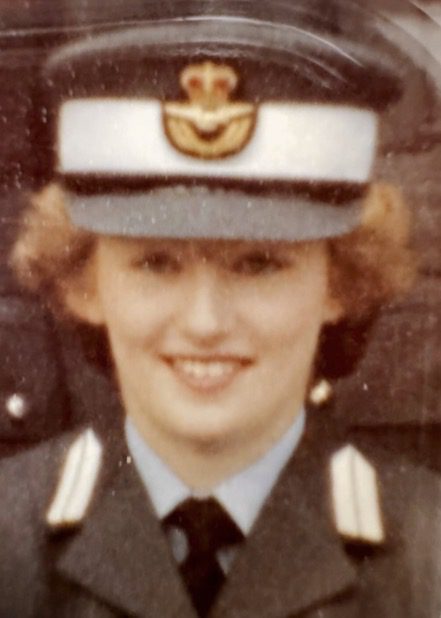
Tina in the RAF
Three years ago, Tina and her husband Mark moved to Hughenden Gardens to ensure Tina could access support quickly, particularly after developing epilepsy. The reassurance of onsite care brought peace of mind. “It’s safe here, there’s care when I need it, it’s better… Living here, people are really friendly, they get together, there’s more community… Now I go to the gym every week!”
It wasn’t all smooth sailing though, it took Tina a while to adjust after they first arrived: “When I arrived here, I only spoke a bit and I was very silent as I wasn’t very confident.”
But things changed for the couple and real strides were made when she and Mark took part in the BBC documentary Rose Ayling‑Ellis: Old Hands, New Tricks, filmed at Hughenden Gardens. The programme explored how BSL can support communication and wellbeing among older people. Rose Ayling‑Ellis, who has been deaf since birth, taught BSL to a group of residents, demonstrating just how empowering visual language can be. As Rose said in the documentary: “People think sign language is just for deaf people but it’s so much more than that.”
Speaking about Tina’s progress, Rose added: “Tina has worked so hard for this, because she wants to find another way to communicate without having to fight for her voice to say it. I really believe sign language is not just for deaf people it’s for everyone; Tina is a different case.”
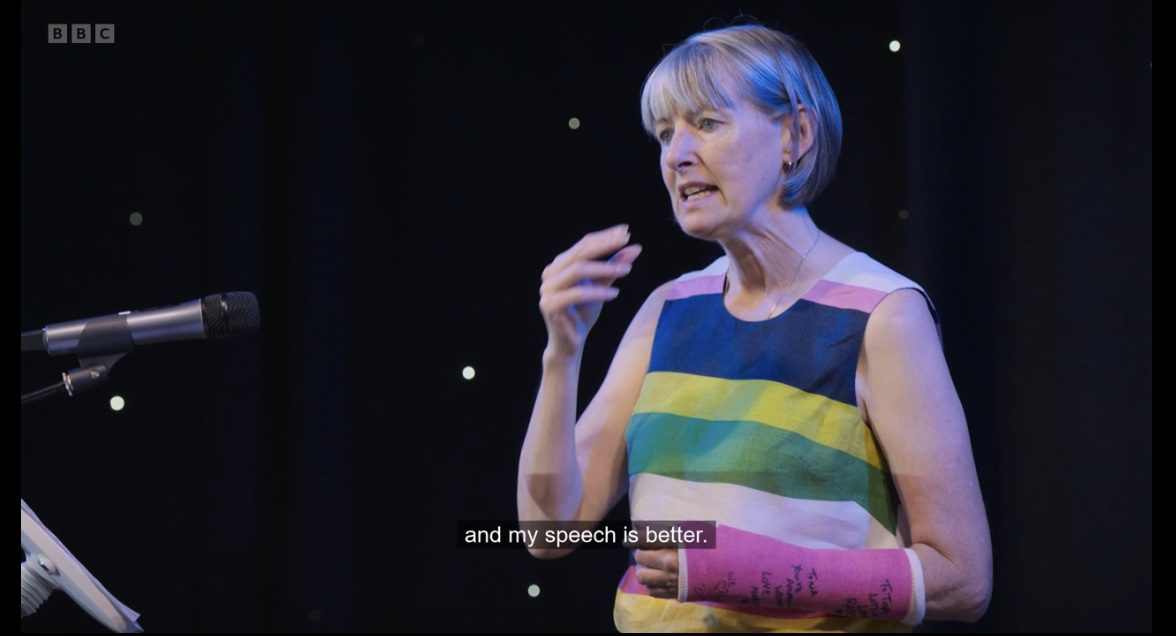
Tina delivering her speech in the documentary. Image credit: BBC
Mark has witnessed the transformation firsthand: “Where Tina’s come from is amazing, we thought we were going to lose her, and we weren’t sure if she was ever going to walk or talk again. BSL has helped Tina communicate as she uses her face and expressions as well as hands so you can understand her emotions better.”
Tina was one of five residents (alongside husband Mark) and several staff members to achieve a Level 1 BSL qualification. It was no small undertaking, lessons ran three times a week, complete with homework and revision. Their learning journey included signed bingo, a deaf rave, and deaf cooking classes as they progressed from alphabet basics to more advanced communication.
Inspired by the documentary, Mark even began leading regular BSL practice sessions for around 20 residents, despite never having planned to teach.
For Tina, the greatest outcome is the confidence and voice she has regained through signing:
“I’m scared of talking sometimes but BSL has helped me relax…the RAF taught me challenges, but BSL is no different”
The couple have also discovered new ways to support each other in everyday life. Mark notes: “At medical appointments we realised we could sign to each other to communicate something privately.”
The documentary prompted Tina’s family to rally behind her progress. She even delivered a speech in front of a crowd using sign language as the programme came to an end. When having to speak and sign became tough in the speech her she was advised by Rose to ‘turn off her voice’ and let the sign language do the talking. She signed the rest of the speech to a room of applause. Within the community she and Mark have become unexpected sources of inspiration. “People come up to us in the streets to say we’ve inspired people to take it up.”
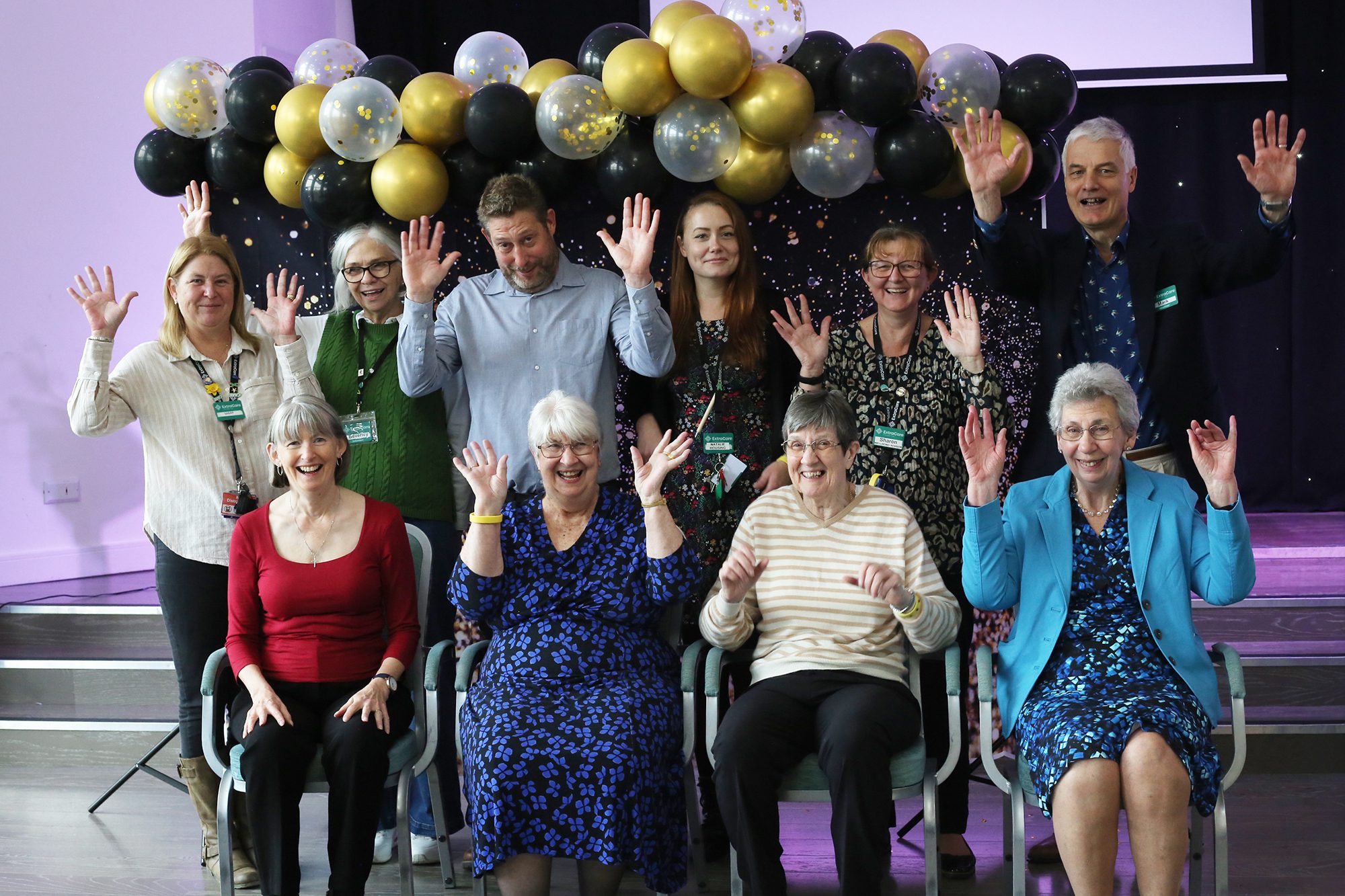
Tina and fellow resident graduates
Since the programme aired, Hughenden Gardens has become a hub of deaf awareness and inclusive communication. The village now hosts monthly Deaf Café events, has welcomed groups such as the Jewish Deaf Association, and is investing in deaf‑friendly improvements including staff training, updated intercoms, clearer signage, and SignLive video interpreting.
For Tina, learning a new language has been nothing short of life‑changing. She stands as a powerful example of resilience, reinvention, and the transformative impact of accessible communication. Her journey shows how learning BSL, an expressive, inclusive and empowering language can become a lifeline, a source of confidence, and a way to reconnect with the world.

Charlotte Millions
Charlotte has over 15 years experience in the PR industry specialising in content creation across sectors. For the past 5 years she has been writing about the retirement living sector, integrated retirement communities, and active ageing in later life. She specialises in news articles on later living and the benefits and options of retirement villages.
Similar Stories

Retirement Village Residents Mime Rock Legends in Lip Sync Tribute Show
Residents at The ExtraCare Charitable Trust’s Lovat Fields Retirement Village in Milton Keynes performed their own ‘Lip Sync’ mime show paying tribute to stars such as Diana Ross and Boy George.
October 10, 2016

How do you spend time with your grandparents? – Our top 4 ideas!
Wondering how do you spend time with your grandparents meaningfully? Discover 4 thoughtful ways to connect in this article.
October 1, 2024