Don’t be lonely this winter! How retirement villages help residents beat the seasonal blues
Published November 3, 2026 by Hannah Makin
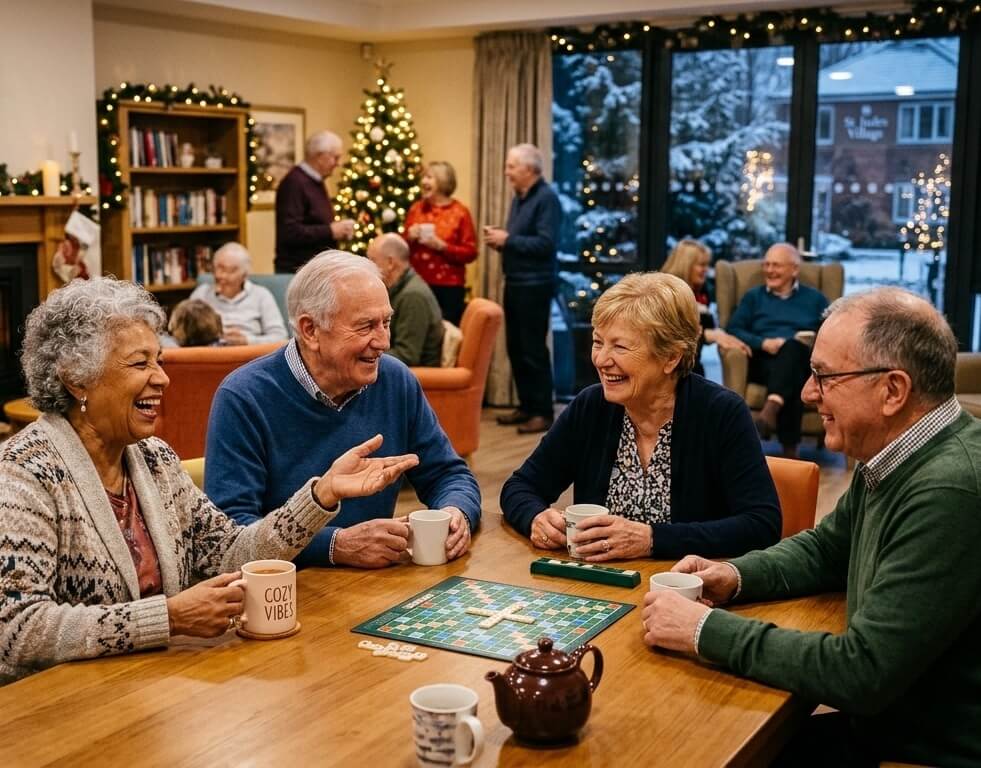
At ExtraCare we’re really passionate about loneliness not being inevitable and where you live can make a huge difference. Our retirement villages are built around exactly this problem, giving residents a built in community and a reason to see a friendly face every day, whatever the time of year.
Understanding Seasonal Affective Disorder (SAD): symptoms & solutions
Feeling a bit flat when the clocks go back is common, but for some people it really goes further than that. You may have heard of Seasonal Affective Disorder (SAD)? It’s a recognised form of depression that follows the seasons, usually appearing in autumn and lifting again by spring. The NHS lists it as a genuine mental health condition, not something to shrug off and estimates of how many people are affected each winter range from around 1 in 15 to as many as 1 in 3 depending on how mild or severe the symptoms are.
Here’s a table that outlines common SAD symptoms, practical daily management strategies and medical support options:
| Category | Key indicators and details | Practical action and management strategies |
|---|---|---|
| Mood & emotion | • Persistent low mood lasting weeks • Loss of interest in usual hobbies and activities | • Stay socially connected with friends, family or neighbours • Join community groups or social events |
| Energy & sleep | • Excessive sleeping or/and difficulty waking up • Low energy levels and fatigue during routine tasks | • Sit near windows in well-lit rooms • Maintain a consistent sleep schedule |
| Behaviour & nutrition | • Increased carbohydrate cravings and appetite changes • Social withdrawal and isolation | • Get outdoors during daylight hours (e.g daily short walks) • Stay physically active with light indoor and outdoor exercise |
| Medical interventions | • Persistent low mood affecting daily functioning • Severe impairment in quality of life | Consult a GP for professional treatment options: • Light therapy (SAD lamps) • Talking therapies (e.g CBT) • Prescribed medication where appropriate |
3 Ways retirement villages help residents stay connected this winter
1. Communal spaces
Most retirement villages like ExtraCare have lounges, bistros, activity rooms and gardens designed for residents to drop into whenever they fancy some company, giving people a reason to leave their apartment, even on a grey Tuesday!
2. A packed events calendar
Seasonal events matter more than ever in winter, ExtraCare’s Activities Coordinators shared a list of some of the things from their upcoming calendars:
- Festive markets and carol evenings
- Coffee mornings and afternoon teas
- Games nights and bingo
- Guest speakers or entertainers
- Dance classes
- Book club
- Dementia and wellbeing groups
- Film nights
- Knitting club
- Table tennis
- Gardening clubs
- Men’s clubs
- Tai Chi
- Arts and crafts
- Ceramics
- Computer and internet training
- Woodwork
- Choir
- Snooker
- Bowls
- Prayer group and Communion
A full calendar means there’s always something on the horizon to look forward to!

At Earlsdon Park Village, Volunteer Organiser Abtar explains how volunteers help residents who may be experiencing loneliness or social isolation:
“We have dedicated volunteers who will meet with residents who have been identified as being isolated or lonely. They encourage them to leave their apartments and meet in the Bistro and attend activities such as the Choir or Knit & Natter so they will have the opportunity to get to know other people.”
It’s a lovely reminder that staying connected isn’t just about having activities to attend. Sometimes, knowing there’s a friendly face nearby and someone who cares can make all the difference, especially during the winter months.
Final thoughts
This is really the difference a retirement village makes. Connection isn’t something residents have to go looking for, it’s part of daily life. A short walk to the communal lounge, a familiar face at breakfast, a neighbour who knows to knock if your curtains haven’t opened by 10:00, these small things add up to a much warmer winter.
Curious to discover what life at ExtraCare could look like? Download our brochure to explore village life, from social activities to opportunities to get involved.
Hannah Makin
Similar Stories

Q&A: ExtraCare’s Aran Duggan on the retirement living pioneer’s sustainability journey
The team started its sustainability journey by creating an Energy Group, which focussed initially on obtaining reliable and robust data relating to utilities and fuel consumption across our locations.
July 6, 2023

Spitfire flight proves the sky’s the limit for Kettering retiree
In early August Kettering retirement resident Doreen Allen made her lifelong dream a reality, the 91-year-old got to fly in a spitfire!
August 14, 2024