Our wellbeing service
ExtraCare’s award-winning wellbeing service supports all residents to be proactive in managing their own health. Our wellbeing service has been recognised as best practice through a number of regional and national awards.
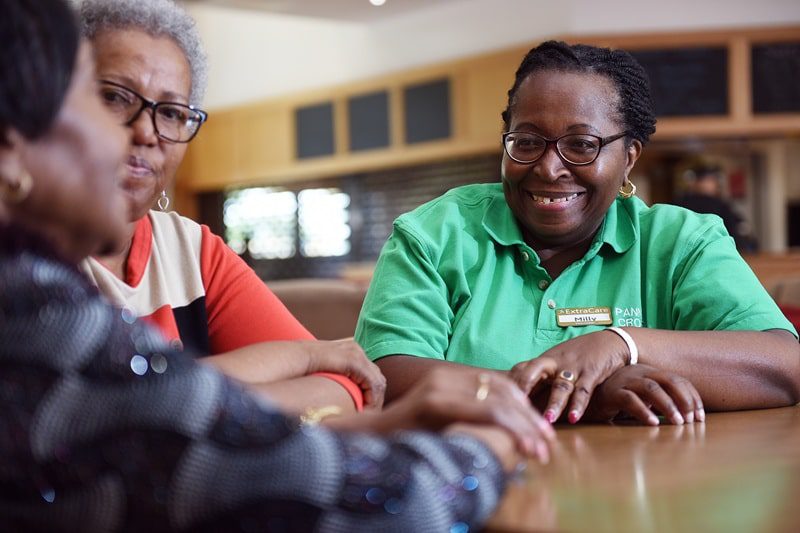
Prior to the introduction of the wellbeing service we discovered a number of key findings. Our research proved that our model of integrated homes, health and care makes a real difference to our residents lives.
A survey at one ExtraCare housing scheme revealed that 75% of those living independently had not accessed their GP within the last year, perceiving ill health, discomfort and disability to be natural consequences of getting older.
Some other key findings:
The pilot wellbeing service in two housing schemes identified 122 previously undetected and untreated conditions amongst a population of 135 people.
Common issues identified include high blood pressure, urinary tract infection and diet.
One ExtraCare village estimates a saving of 500 hospital bed-days per annum as a result of reduced unplanned admissions.
Minimal intervention can significantly improve quality of life: 105 people were identified with hearing loss, of which 48 benefited from almost immediate improvement due to ear syringing and hearing aid repair/adjustment.
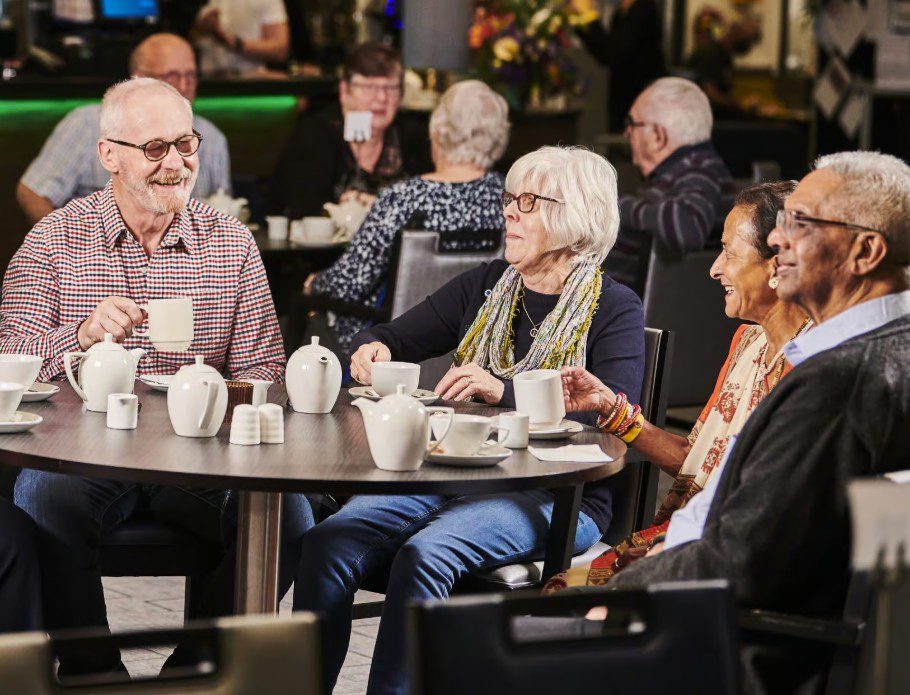
Our Wellbeing Team, made up of Wellbeing Advisors and Enablers, overall aim is to promote the physical and mental wellbeing of ExtraCare’s residents, this is achieved by carrying out resilience assessments, health promotion sessions, drop-ins and individual casework.
Before moving in you will have a baseline health assessment. Designed to ensure we are aware of all health conditions and can make sure this move is right for you, the baseline assessment gives a thorough overview of physical, mental and cognitive health. Provide us with a copy of your medications, and a medical history summary from your GP and we’ll get started!
Typical baseline assessments include:
- A physical assessment
- Clinical tests
- Questions to discuss any worries
- Cognitive questions
The results help us understand how we can tailor your support or signpost to other services. Your progress is supported through follow-up assessments; wellbeing talks or a referral to our on-site gym as appropriate to your needs.
The Wellbeing Advisors across the locations are allowed to do the following:
- Take, record and monitor blood pressure
- Take random blood sugars (blood sample taken from the finger)
- Take random cholesterol (blood sample taken from the finger)
- Measure height, weight and body mass index
- Take a temperature
- Screen urine samples
- Provide advice re dietary intake
- Provide advice re chronic health conditions such as hypertension (high blood pressure), heart disease, asthma and diabetes.
Our staff can also assist with a broad range of health and wellbeing needs, such as Parkinson’s, Alzheimer’s, dementia, diabetes, falls prevention, support following bereavement, mental health awareness and more.
All of the above are in line with ExtraCare’s policies.
Cookie consent required
To help create better lives for older people by donating to ExtraCare online, please allow cookies by changing your cookie preferences or click the button below.

Engaged lives project
Our Engaged Lives project was a drive to build greater community and connection amongst the UK’s older population.
Supported by the National Lottery Community Fund, the project aimed to build the confidence and capacity of our residents (and the wider community) to lead “Engaged Lives” – lives of immersive and purposeful activity, within a community that people felt they belonged to.

Wellbeing Service FAQ’s
1. How does ExtraCare support wellbeing?
ExtraCare supports residents’ wellbeing through its award-winning wellbeing service, which helps people understand, monitor and manage their physical and mental health while living independently.
Key wellbeing support includes:
• Initial assessments to build a clear picture of each resident’s overall health and wellbeing.
• Drop-in support to discuss concerns and signpost residents to internal or external services.
• Resilience assessments to identify whether wellbeing has improved, declined or changed over time.
• Education, guidance and collaboration with services to help residents manage their health proactively.
2. Are wellbeing and care services available temporarily?
Yes. ExtraCare’s wellbeing service is an ongoing part of village life, rather than a one-off service. Residents can access support when they move in and continue to use it as their needs change over time.
Ongoing wellbeing support may include:
• Health and wellbeing assessments when residents move in.
• Resilience reviews to monitor changes in wellbeing over time.
• Drop-in support for questions, concerns and guidance.
• Health promotion, signposting and advice to help residents remain independent for longer.
Specific wellbeing support may vary by village, individual need and staff availability, so residents should check details with their local ExtraCare village.
3. What makes ExtraCare different from traditional care homes?
ExtraCare offers an alternative to traditional care homes by combining independent living, community life and flexible care in one place. Residents live in their own home within a village or scheme, with access to tailored care, wellbeing support, social activities and shared facilities.
This means people can maintain privacy, choice and independence while still receiving support if their needs change. Residents can engage into a community living space that helps supports their individual needs.
• Your own front door: residents live in their own apartment or home, not a room in a care home.
• Independence first: support is designed to help people stay active, confident and in control of daily life.
• Flexible care: care can increase or decrease as needs change.
• Community setting: villages and schemes include social spaces, activities and opportunities to connect with others.
• Wellbeing focus: ExtraCare supports physical, mental and social wellbeing, not just personal care.
• Couples can stay together: people with different care needs may be able to continue living together.